

Polymer, Plastic, & Composite Chemical Analysis Services
The real-world performance of polymers, plastics, and advanced composites comes entirely down to their underlying chemistry. At IMR Test Labs we provide comprehensive chemical and thermal analysis to help you prevent unexpected distortion, cracking, and structural failure by:
- Verifying exact material composition and identifying even minor variations in raw material purity
- Validating thermal processing parameters to ensure you materials perform exactly as expected
- Providing the critical data you need to guarantee your components delivery optimal durability in the field
Thermal Analysis Capabilities
Our thermal testing suite tracks how polymers and composites react to shifting temperature profiles, providing critical benchmarks for manufacturing process control and material qualification:
- Thermogravimetric Analysis (TGA): Measures changes in weight as a function of temperature. TGA is essential for determining thermal stability limits, decomposition kinetics, and quantifying filler content, carbon black, or ash residues.
- Differential Scanning Calorimetry (DSC): Tracks heat flow characteristics to identify critical phase transitions. We utilize DSC to determine precise glass transition temperatures ($T_g$), melting points, crystalline-to-amorphous ratios, and oxidative induction times (OIT).
- Thermomechanical Analysis (TMA): Evaluates dimensional changes under a constant mechanical load across a temperature gradient, primarily used to calculate the Coefficient of Thermal Expansion (CTE) and pinpoint softening points.
- Dynamic Mechanical Analysis (DMA): Investigates viscoelastic properties by applying an oscillating stress to measure material stiffness (modulus) and energy dissipation (damping) over a shifting thermal window.
Molecular Fingerprinting & Compositional Analysis
When validating raw resins or investigating an unexpected material failure, our chemical laboratories utilize advanced spectroscopy to map molecular and elemental composition:
- Fourier Transform Infrared Spectroscopy (FTIR): Provides an instantaneous molecular "fingerprint" of organic compounds. FTIR is our primary tool for rapid polymer identification, material validation against specifications, and organic contaminant troubleshooting.
- SEM / EDS Micro-Analysis: Combines high-magnification Scanning Electron Microscopy with Energy Dispersive X-Ray Spectroscopy to provide sub-micron structural imaging alongside precise elemental chemistry mapping—ideal for checking fiberglass
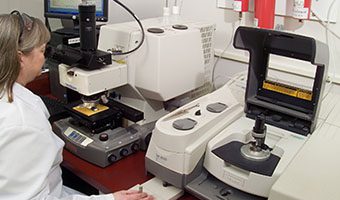
Determining the molecular chemistry of non-metallic materials is primarily accomplished using FTIR and Micro-FTIR Spectroscopy. This technique provides rapid confirmation that a sample is made from the proper material and often whether there are contaminants present.
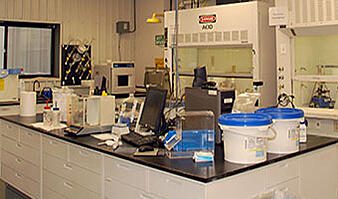
IMR utilizes testing methods to analyze composites made from two or more constituent materials with significantly different physical or chemical properties that, when combined, produce a material with characteristics different from the individual components.
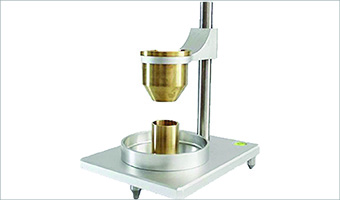
The principle of this type of analysis is that once an ion's mass has been determined as a unique compound, that known measurement can then be used to determine the same analyte's mass in a mixture, as long as the relative quantities of the other constituents are known.

Contact our experienced team of nonmetallic engineers and lab technicians with your challenges and we'll collaborate with you to develop solutions. Click here for more information.

Tests are designed to evaluate ignition susceptibility, burning propagation, or combustion characteristics of non-metallic materials under a range of pressure and temperature conditions.
IMR performs Vertical Burn Testing to FMVSS 302 and UL 94 requirements.
Why Choose IMR Test Labs for Material Validation?
We bridge the gap between raw data and actionable engineering insight. Our multi-disciplinary team of polymer chemists, materials scientists, and laboratory technologists works collaboratively to deliver clear, fully interpreted reports that keep your production line running safely and efficiently.
