

Scanning Electron Microscopy | SEM Analysis Services
Scanning Electron Microscopy (SEM) Analysis Services
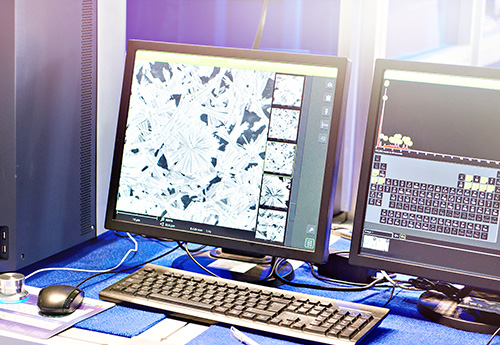
Scanning Electron Microscopy (SEM) is an advanced imaging and microanalysis technique that utilizes a focused beam of high-energy electrons to generate high-resolution, high-depth-of-field images of solid specimens.
Unlike conventional optical microscopes that are limited by the wavelength of light, SEM provides massive magnification capabilities (up to 300,000X or greater). This allows our materials scientists to interrogate the surface texture, topography, and microstructure of metals, polymers, ceramics, and composites, verifying that your materials meet strict design specifications for optimal field durability.
How SEM Analysis Works
specialized electron-sample interaction:
- Electron Beam Excitation: A high-energy electron gun emits a focused beam of electrons that sweeps across the surface of the specimen in a raster pattern.
- Signal Generation: As the primary electrons interact with the atoms at or near the sample surface, they knock loose various secondary signals, including Secondary Electrons (SE) and Backscattered Electrons (BSE).
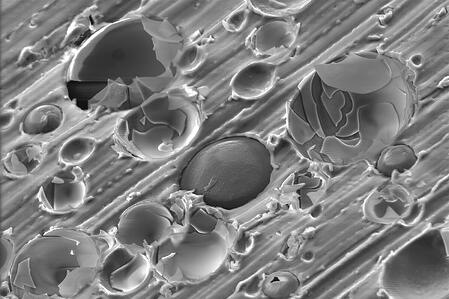
- Information Relay: * Secondary Electrons provide ultra-high-resolution topographic mapping (revealing 3D surface textures, fractures, and finishes).
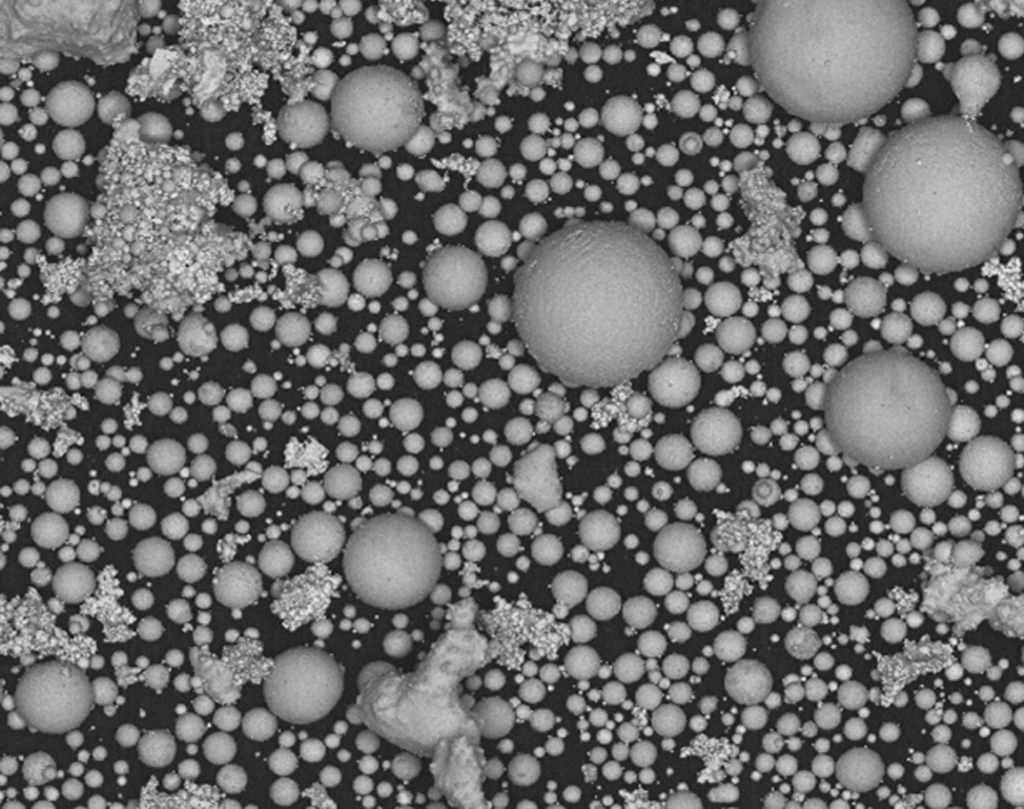
- Backscattered Electrons provide compositional contrast, highlighting variations in chemical atomic density (heavier elements appear brighter).
Featured Benefits of SEM Analysis
| Key Advantage | What It Delivers | Industrial Value |
|---|---|---|
| High-Resolution 3D Imaging | Extreme depth of field that captures crisp, sharply focused images across highly irregular or fractured surfaces. | Essential for forensic fractography, micro-crack tracking, and surface roughness mapping. |
| Integrated Elemental Analysis | Combines visual imaging with instantaneous chemical microanalysis via EDS or WDS detectors. | Allows engineers to pinpoint the exact chemical composition of an unknown inclusion or contamination spot. |
| Exceptional Sample Versatility | Accommodates an incredibly diverse range of sample states with minimal specialized preparation. | Rapidly analyzes bulk solids, microscopic fibers, loose powders, engineered coatings, and particulate matter. |
Micro-Chemical Evaluation: EDS & WDS Capabilities
By equipping our scanning electron microscopes with advanced X-ray spectrometers, IMR Test Labs provides localized, non-destructive elemental analysis directly alongside high-magnification imaging:
- Energy-Dispersive X-Ray Spectroscopy (EDS): Used to rapidly identify and quantify the elemental composition of materials within the microscope's field of view. It is ideal for general alloy identification, line scans, and creating full-color elemental mapping profiles to visualize material distribution.
- Wavelength-Dispersive X-Ray Spectroscopy (WDS): Provides superior peak resolution and significantly lower detection limits compared to EDS. WDS is utilized when looking for ultra-trace elements or separating overlapping elements in complex alloys.
Cross-Industry Applications
Our digital SEM data pipelines provide rapid, sophisticated characterization to support production control and research across strict technological sectors:
- Materials Science & Forensics: Conducting root-cause failure analysis, evaluating fracture surfaces, and determining wear mechanisms.
- Semiconductor Manufacturing: Mapping micro-circuit pathways, auditing thin-film layer depositions, and identifying particulate contamination.
- Nanotechnology & Advanced Fibers: Evaluating particle size distributions, matrix dispersion, and checking composite reinforcement fibers.
- Geology & Specialized Industrial: Qualifying mineral phases, environmental dust samples, and complex multi-component materials.
METALLURGICAL LAB SERVICES
Carburization
Case Depth
Certified Weld Inspections
Coatings Evaluations
Coating Thickness by XRF, SEM, Cross Section
Case Depth
Depth of Decarburization
Determination of Delta Ferrite Content
Determination of Volume Fraction by Point Count
Effective Case Depth
Failure Analysis
Fastener Discontinuities
Fluorescent Impregnation of Porous Coatings
Fractography
Fracture Mechanics
Grain Size
Inclusion Content/Rating
Intergranular Attack
Intergranular Oxidation
Light Microscopy - Macro, Micro & SEM Photography
Macroetching
Microetching
Microhardness (Knoop, Vickers, MacroVickers)
Microstructure
Orientation in Microstructure
Particle Analysis (Distribution, ID, Size)
Phase Volume Determination
Pipeline Integrity
Plating Evaluations
Plating Thickness
Porosity of Metals, Ceramics & Composites
Prior Austenitic Grain Boundary Determination
Replication (ASTM E1351)
Quantitative Image Analysis
SEM Analysis
Surface Evaluation (Dubpernell Active Site Test ASTM B456 Appx 4)
Surface Topography
Thermal Spray Coating Analysis
Titanium Beta Transus Determination
Weld Qualification & Testing
SEM Imaging and Analysis
There have been many advances in SEM technology due to improvements in lens design, high-brightness electron sources, new detectors, and electronic signal processing. There are many different types of scanning electron microscopes designed for specific purposes ranging from routine morphological studies to high-speed compositional analyses.
SEM Imaging: Custom Solutions
If your needs for SEM analysis transcend conventional testing protocols, contact us to create a custom testing process.
RELEVANT ACCREDITATIONS
Click here for a complete list of accreditations and certifications for all IMR Test Labs locations.
FAQ's
Coatings, fibers, powders, solid materials and biological specimens can be tested with SEM Analysis.
Surface roughness, crystallographic information, topography, particle size, and elemental composition are all revealed through SEM analysis.
Analyses can be completed in as little as a few hours.
