

COMPOSITE MATERIALS TESTING LABORATORY
Evaluating composite and polymer materials across diverse applications requires a multi-disciplinary approach to ensure components meet ridge performance standards. IMR Test Labs provides comprehensive composite polymer testing to quantify material behavior by:
- Executing a full suite of mechanical, physical, thermal, chemical, flammability, and optical evaluations - including tensile, shear, and compressive strength testing
- Utilizing in-house sample machining to accelerate turnaround times while delivering concise reports with complete stress-strain diagrams, yeild points, and proportional limits
- Leveraging multi-disciplinary engineering and chemical expertise to guide material selection, validate durability, and ensure full regulatory compliance

Fiber-reinforced composites are strong, lightweight, corrosion and heat-resistant, making them ideal for use in aerospace, automotive, and energy industries.
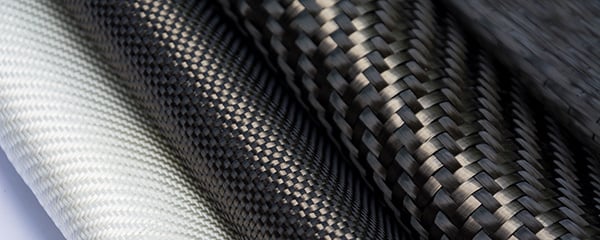
Modern materials require significant testing and validation to ensure that the raw materials and final products are manufactured and cured correctly for the intended application.

Our experienced staff works directly with you to implement your test plan. Our composites lab provides routine production control testing, support for R&D efforts to manufacturers in a wide range of industries from infrastructure to aerospace.

Our fiber-reinforced composites, polymer, plastics, and coatings experts are well-versed in the failure modes of these materials. Our analyses provides you with clear, concise report that explains the contributing factors of the failure and suggestions to prevent a recurrence.
Composite Testing- Industries Served
- Aerospace
- Composite materials in aerospace must withstand extreme conditions, including temperature extremes, mechanical stresses, and chemical exposure.
- Rigorous testing ensures safety and compliance with industry-specific regulations.
- Automotive
- Lightweight composites help improve fuel efficiency while maintaining structural integrity.
- Medical Device
- Additive Manufacturing
- Composites used in critical infrastructure and defense require heightened durability and performance standards.
FAILURE CONDITIONS TO TEST FOR
Manufacturers must test composites for potential failure attributes to mitigate risks:
Toughness and hardness
Resistance to cracking
Temperature and flame resistance
Impact strength and ductility
Proper testing reduces liability and provides verifiable proof of compliance and performance.
COMPOSITE FAILURE ANALYSIS PROCESS
Composite failures can arise from delamination, fiber/matrix debonding, or fiber fracture. Our failure analysis follows a systematic approach.
- Review Pre-Failure Steps: Assess material selection and manufacturing processes.
- Simulate Failure Conditions: Replicate the operational environment.
- Chemical Analysis: Analyze the failed and intact components.
- Root Cause Analysis: Determine underlying factors contributing to the failure.
- Preventative Recommendations: Provide actionable steps to avoid recurrence.
KEY BENEFITS OF COMPOSITE TESTING
- Safety Assurance: Verify materials meet safety standards for the intended application.
- Performance Validation: Ensure materials meet design and operational requirements.
- Regulatory Compliance: Adhere to industry-specific regulations to avoid fines or penalties.
- Cost Optimization: Select the best material for your budget without compromising quality.
Composite Testing- FAQ
Composite materials testing is typically a process that can be completed quickly, with many taking 1 to 3 days. However, complex test programs can have extended lead times. A discussion with a knowledgeable IMR Test Labs Test Engineer will yield an accurate program timeline.
IMR Test Labs provides composite materials testing such as taber abrasion, prepreg, composite layup, hardness, microstructure, chemical analysis, tensile testing, compression, and many others.
Almost every manufacturing industry uses some type of polymer. IMR Test polymer testing laboratory tests and prepares analytic reports for the aerospace, automotive, medical device, and additive manufacturing industries and countless others.
Composite materials can be tested by being bent, stretched, exposed to pressure, exposed to simulated atmospheric conditions, and analyzed chemically.
The ASTM standard for Composite Materials testing is: ASTM D4762-18 “Standard Guide for Testing Polymer Matrix Composite Materials”
WHY CHOOSE IMR TEST LABS
Our team of experts performs comprehensive composite testing tailored to your needs, including routine production control, R&D support, and failure analysis. We specialize in:
- Generating detailed stress-strain diagrams
- Identifying elastic and proportional limits
- Analyzing yield points and compressive strength
We ensure clients understand the results and how they inform decision-making.
