

Corrosion Testing Services: Environmental Simulation & Material Validation
During the material selection process, evaluating how metals, alloys, and coatings react to their intended operating environments is critical. By exposing samples to simulated, accelerated corrosion conditions, our laboratory provides the predictive analytical data needed to verify long-term performance, estimate service life, and prevent catastrophic field failures.
In addition to material selection, our testing acts as a vital quality control check—ensuring that your surface treatments, anodizing, electroplating, and coatings are performed exactly to specification.
Corrosion Testing Methods
We utilize specialized equipment to replicate natural environmental, atmospheric, and electrochemical conditions.
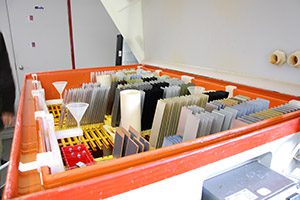
Accelerated environmental weathering methods like ASTM B117 salt spray, passivation testing, and cyclic corrosion are performed at defined intervals, utilizing temperature and humidity controls.
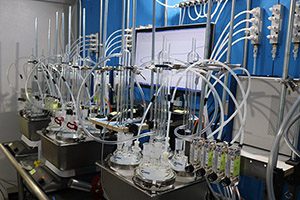
Electrochemical Corrosion Testing is performed to ASTM G199 through a controlled electrochemical reaction between two materials, or between an exposed surface and its operating environment.
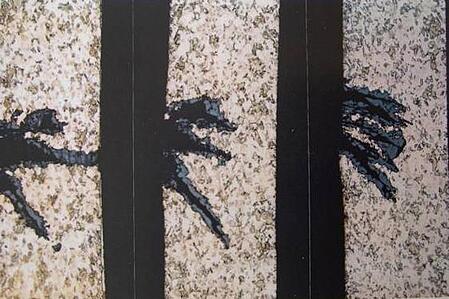
Corrosion Testing Services- ASTM Standards
ASTM B117
ASTM G199
Characterizing the Types of Corrosion
Corrosion manifests in many different ways depending on material composition and environmental stressors. We help manufacturers identify, test for, and mitigate these specific failure modes:
1. Surface-Wide Degradation
- Uniform (General) Corrosion: Widespread exposure causes even rust or degradation across the entire exposed surface. While common, its predictable rate allows engineers to calculate tolerable boundaries.
- High-Temperature Corrosion: Occurs in combustion environments (like engines or furnaces) where extreme heat triggers oxidation in metals that are normally corrosion-resistant at room temperature.
2. Localized & Hidden Vulnerabilities
- Localized Corrosion (Pitting & Crevice): Attacks specific, isolated areas where a coating fails or moisture gets trapped. Pitting is highly nonlinear, random, and notoriously dangerous for alloys like 300-series stainless steel because it destroys structural integrity from the inside out while remaining nearly invisible on the surface.
- Galvanic Corrosion: Occurs when two dissimilar metals make physical contact in an electrolyte solution, causing an electrochemical reaction that rapidly degrades the less noble metal (the anode).
- Alloy Corrosion (Selective Leaching): Corrosive elements selectively target and dissolve one specific component of an alloy, structurally destabilizing the entire matrix.
3. Mechanically & Environmentally Assisted Damage
- Environmentally Assisted Cracking (EAC): The combined execution of mechanical stress and chemical exposure. This includes stress corrosion cracking (SCC) caused by internal pressures, vibrations, or leftover stresses from welding and machining.
- Erosion-Corrosion (Flow-Assisted): High-velocity water or air flow continuously sweeps away protective oxide layers, exposing fresh metal to rapid, non-stop degradation.
- Fretting Corrosion: Occurs at tight structural interfaces where continuous, microscopic friction and vibrations rub away surface protections.
Why Partner with Our Corrosion Experts?
- Actionable Comparative Data: Run side-by-side benchmarking of candidate materials to pick the most cost-effective, durable metal for your application.
- Accredited Quality Assurance: Ensure your suppliers are meeting strict aerospace, automotive, and defense coating thickness and durability specs.
- Root-Cause Failure Analysis: If a part has already failed in the field, our metallurgical team can isolate the precise environmental variable or corrodent responsible for the attack.
Corrosion Testing Services - FAQs
Corrosion testing evaluates how materials degrade in specific environments. Tests simulate real-world conditions to assess a material's resistance to rust, oxidation, and other forms of corrosion. Further advanced techniques can also be used for surface analysis and chemical composition assessment.
Corrosion testing is designed to simulate anywhere from a few months to several years of natural exposure. A ratio of number of hours to natural exposure time is followed and can vary depending on the material being tested and the natural exposure that is being simulated.
Corrosion testing simulates weather elements such as rain and fog, ocean spray, UV light exposure, temperature, wind-borne particles, and pollution.
Corrosion testing provides key insight into material’s susceptibility to it’s environmental exposures therefore allowing the end user to evaluate whether it is correct for the application, if it will perform as expected, or if an alternate material is more suitable.
Download Our Comprehensive Guide to Corrosion Testing
According to NACE, the global cost of corrosion is estimated to be $2.5 Trillion, which is equivalent to 3.4% of the global CDP. Through near misses, incidents, and forced shutdowns, several industries have come to realize that lack of corrosion management can be very costly and that corrosion should be mitigated through proper management.
Access our full guide on corrosion testing, which covers essential topics:
Corrosion Types: Learn about the different forms of corrosion that affect components, from pitting to galvanic corrosion.
Consideration for Manufacturers: Discover key factors manufacturers must account for when selecting materials and designing for corrosion resistance.
Industry-Specific Corrosion Testing: Understand how different industries, such as aerospace and automotive, approach corrosion testing to ensure long-term durability.
IMR Test Corrosion Testing Laboratories
