

IMR Materials Testing Technical Blog
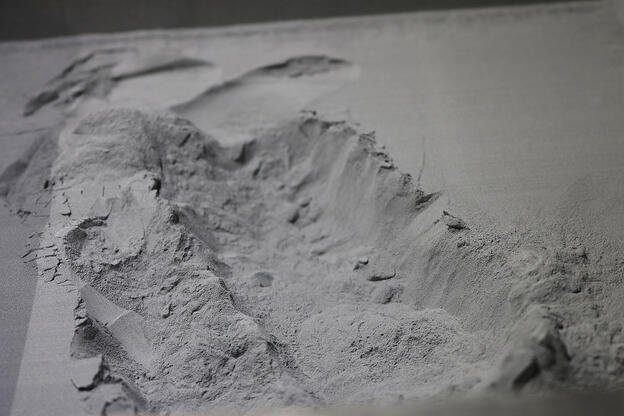
For manufacturers using metal additive manufacturing (AM), the ability to reuse expensive metal powders is a critical factor in achieving cost-effectiveness. Materials like titanium, nickel-based superalloys, and cobalt-chrome are high-value and indispensable for high-performance applications. Without the ability to reuse feedstock, the economic viability of many projects would be severely compromised.
However, the reuse of metal powder introduces a significant challenge: maintaining consistent material characteristics throughout multiple build cycles. The intense, localized heat of AM processes can alter a powder’s physical properties and chemical composition. This can lead to compromised final products with unpredictable mechanical properties, surface defects, and even catastrophic failures. Monitoring powder quality isn’t just a best practice; it’s a necessity for ensuring part integrity and production consistency.
Key Powder Characteristics that Change During Re-Use
To ensure reliable process, it’s essential to monitor the four most common characteristic changes that occur in resued metal powders:
Morphology (Shape)
There is a tendency for the spherical shape of the original powder to degrade into more angular, irregular particles. This change can negative impact flowability and packing density.
Alloy Chemistry
The most common change is an increase in oxygen content, which can embrittle the final part and compromise its mechanical properties.
Particle Size Distribution (PSD)
Over multiple builds, the PSD can become tighter due to the loss of smaller particles through the process.
Over multiple builds, the PSD can become tighter due to the loss of smaller particles through the process.
Flowability
The rate at which powder flows can increase due to the loss of small particles, which can lead to issues with layer consistency during the build. Conversely, changes in shape or agglomeration can inhibit flow.
Understanding these changes is crucial. For example, an overly wide PSD can lead to poor packing and defects in the final part. An overly narrow PSD can result in insufficient packing, creating internal pores that weaken the part.
Ensuring Quality Through Comprehensive Powder Testing
Fortunately, these challenges can be mitigated with robust testing protocols. At IMR Test Labs, we utilize established ISO/ASTM methods to provide a complete characterization of your metal powders. Our analytical capabilities include:
Particle Size Distribution
Using techniques like sieving and laser scattering (Microtrac).
Flow and Density
Measuring Carney/Hall flow and tap density to evaluate powder packing and flowability.
Alloy Chemistry
To monitor changes in elemental composition, such as oxygen concentration.
Morphology
Using Optical and SEM (Scanning Electron Mircoscope) image analysis to assess particle shape and surface texture.
Different metal powders exhibit unique tendencies for characteristic modifications during reuse. IMR Test Labs partners with additive manufacturers to develop tailored testing programs, ensuring the effectiveness and long-term viability of their AM feedstock.
Partner with IMR Test Labs to Optimize Your AM Process.
Click to find out more about our additive manufacturing analytical services.
Sources: Understanding the effects of metal powder reuse in laser Powder Bed Fusion, Granger, L.ISO/ASTM 52907:2019
