

Fatigue Testing Services
Our labs utilize cyclic loading (HCF-LCF) to predict material behavior under fluctuating loads and temperatures. By determining fatigue life, we help you validate new materials and prevent costly product failures.
Why Fatigue Life Matters
Understanding material longevity is critical for ensuring safety and reliability in high-stakes industries, including:
- Aerospace Materials: Ensuring structural integrity under extreme conditions.
- Medical Device Testing: Validating long-term performance for patient safety.
Our Capabilities
We offer a wide range of test frames designed to handle diverse loads and sample sizes. Our methods help manufacturers:
- Evaluate candidate materials during R&D
- Validate material characteristics for quality assurance.
- Support failure analysis and recall prevention.
What Types of Materials Can Be Fatigue Tested?
•Metals •Finished Products •Composites •Polymers •Coatings •Non-Metallic/Metal Hybrids
Optimizing Fatigue Testing Variables
Accurate fatigue testing analysis requires precise control over multiple physical and environmental factors. We calibrate our procedures to match your material’s real-world stressors, ensuring a thorough assessment of durability.
Key Testing Parameters
- Load Dynamics: We compare Static Loads (constant pressure) against Oscillating Forces (repeated cycles) to simulate mechanical stress.
- Force Direction: Testing includes specific fatigue types such as Compression, Tension, and Bending to identify directional weaknesses.
- Thermal Environment: Materials are analyzed under Ambient temperatures or extreme Thermal Exposure to account for environmental degradation.
- Operational Scenarios: We replicate real-world use cases to predict how behaviors like vibration or intermittent loading affect long-term integrity.
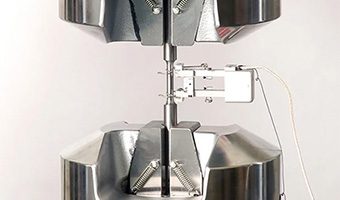
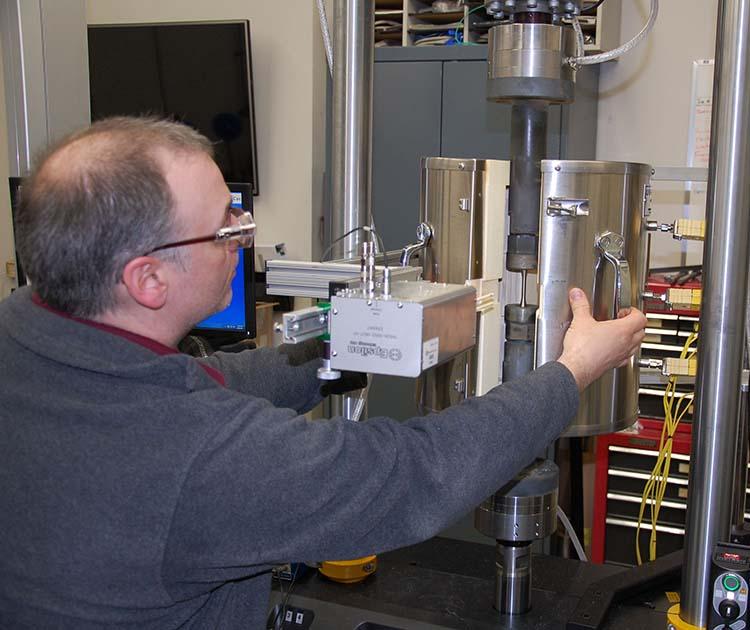
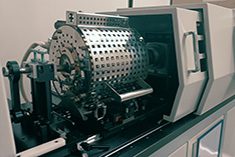
Specialized Mechanical Fatigue Testing Profiles
Axial Fatigue Testing
Axial testing evaluates material durability by applying alternating tension and compression forces directly along a longitudinal axis. This mirrors the real-world stresses placed on structural components like beams, joints, and fasteners.
- Primary Applications: Best suited for metals, alloys, and rigid structural materials.
- Customization: We utilize adjustable load profiles and varying cycle counts to match your specific environmental requirements.
- Precision Data: Every test includes high-accuracy strain measurements to identify the exact point of material yield.
High-Temperature Fatigue Testing
Heat significantly alters material endurance. Our high-temperature testing assesses how cyclic loads impact performance in extreme thermal environments, ensuring long-term reliability where failure is not an option.
Testing Capabilities
- Extreme Thermal Range: Precision testing at temperatures up to 1,200°C.
- Thermal Cycling: We simulate fluctuating heat levels to replicate real-world engine or exhaust start-up/cool-down cycles.
- Live Monitoring: Real-time data collection tracks material deformation as it happens.
Common Applications
- Aerospace: Turbine blades and structural engine components.
- Automotive: Exhaust systems and manifold assemblies.
- Energy: Power plant components exposed to constant high-heat stress.
Rotating Beam Fatigue Testing
This method identifies a material’s endurance limit by rotating a specimen while simultaneously applying bending stress. It is the industry standard for validating parts that must withstand billions of revolutions without failure.
Simulating Real-World Rotation Our labs replicate the stresses found in power transmission and drivetrain systems:
- Logic Anchoring: I moved the "Endurance Limit" to the very first sentence. This gives the reader a goal for the information they are about to consume.
- Action-Oriented Bullets: Changed "High-frequency cycling" to explain its benefit ("accumulates cycles to determine durability in less time"). This reduces the "So what?" factor.
- Formatting for Scannability: Used a separate list for "Applications" to allow the reader to quickly check for their specific industry.
Primary Applications
- Power Transmission: Shafts, couplings, and gears.
- Aerospace: Rotor components and turbine shafts.
- Automotive: Axles and drivetrain assemblies.
Shear Fatigue Testing
Shear testing predicts when a material will fail under repeated "sliding" or sideways forces. It is essential for evaluating the integrity of interfaces where two surfaces are bonded, bolted, or layered together.
Technical Capabilities
- Multi-Axis Loading: We simulate complex, real-world stresses by applying force across multiple planes simultaneously.
- Customizable Shear Angles: Test fixtures can be adjusted to match the specific geometry of your component or fastener.
- Real-Time Strain Data: Precise monitoring detects microscopic shifting or deformation before total structural failure occurs.
Primary Applications
- Fasteners: Bolted joints, rivets, and mechanical connections.
- Adhesives: Glues, resins, and industrial bonding agents.
- Layered Materials: Advanced composites and laminated structures.
Cryogenic Fatigue Testing
Materials often become brittle and prone to sudden fracture at sub-zero temperatures. Our cryogenic testing evaluates how materials endure cyclic loads while exposed to extreme cold, ensuring they won't fail in the harshest environments known to science.
Environmental Precision
- Extreme Cold Simulation: We test materials at temperatures reaching deep cryogenic levels using specialized cooling media.
- Brittle Fracture Analysis: We identify the "ductile-to-brittle" transition point to prevent catastrophic structural failure.
- Stable Thermal Control: Advanced insulation and monitoring ensure the temperature remains constant throughout the duration of the fatigue cycles.
Primary Applications
- Space Exploration: Spacecraft hulls, propulsion systems, and lunar landing gear.
- Energy & Storage: Liquefied Natural Gas (LNG) tanks and cryogenic transport vessels.
- Scientific Research: Superconducting magnets and laboratory infrastructure.
The Value of Professional Fatigue Testing
Fatigue testing is more than a technical requirement; it is a strategic investment in product integrity. By simulating years of stress in a controlled environment, we provide the data necessary to protect your brand and your end-users.
Engineering & Design Advantages
- Predictive Longevity: Establish exact timelines for how long a material can withstand repeated stress.
- Design Optimization: Refine structures to maximize durability while minimizing unnecessary weight or cost.
- Material Selection: Compare candidate materials side-by-side to find the optimal fit for your specific application.
Business & Safety Outcomes
- Risk Mitigation: Prevent catastrophic failures in safety-critical components (Aerospace, Medical, Automotive).
- Regulatory Compliance: Ensure your products meet or exceed ASTM and ISO industry standards.
- Cost Reduction: Identify potential weaknesses early in the R&D cycle to avoid expensive recalls and unplanned downtime.
Reliability starts with data. In safety-critical industries, understanding the limit of your materials is the difference between success and failure.
To learn more about fatigue testing for product durability in safety-critical industries, read our blog.

FATIGUE TESTING FAQs
Fatigue testing evaluates how materials perform under repeated stress cycles, helping predict failure points and ensure durability in real-world applications.
Fatigue testing identifies a material's resistance to cyclic stress, preventing unexpected failures in critical applications like aerospace, automotive, and medical devices.
Common types include axial fatigue, high-temperature fatigue, rotating beam fatigue, shear fatigue, and cryogenic fatigue testing, each tailored to specific conditions.
Aerospace, automotive, medical, energy, and manufacturing industries rely on fatigue testing to verify material performance in extreme or repetitive stress environments.
Tests apply cyclic loading to materials at varying temperatures, stress levels, and frequencies to mimic actual operating conditions and assessing long-term durability.
Fatigue testing follows industry standards such as ASTM E466 for axial fatigue and ASTM E606 for strain-controlled fatigue testing, ensuring reliable and comparable results.
Fatigue test duration depends on the material, applied stress, and required number of cycles, ranging from hours to weeks, depending on test parameters.
MECHANICAL FATIGUE TESTING METHODS
Adhesion (Peel) Testing
Bend Testing
Bond Strength Testing
Charpy Impact Testing (-320°F to 450°F)
Climbing Drum Adhesion of Sandwich Composites
Coating Adhesion
Coating Shear Fatigue
Coefficient of Thermal Expansion by TMA
Composite Testing (Fiber Reinforced)
Compression Set
Compressive Properties
Core Shear Properties of Sandwich Construction by Beam Flexure
Creep and Stress Rupture Testing
DMA (Dynamic Mechanical Analyzer)
Ductility
Elastic Modulus
Fatigue Testing
Filled Hole Tension & Compression
Flattening
Flat-wise Tensile Testing
Flexural Properties
Floating Roller Peel Strength
Fracture Mechanics
Gel Time
Hardness (Rockwell, Brinell, Durometer, Shore, Barcol, Knoop, Vickers, Macro Vickers)
Heat Aging
Heat Deflection by TMA
Heat Treatment (furnace to 2100°F)
Hydrogen Embrittlement
Hydrostatic Pressure
Interlaminar Shear
Jominy Hardenability
Lap Shear Testing
Machining & Specimen Preparation
Materialography
Modulus of Rupture (MOR)
n-Value (Strain Hardening Exponent)
Open Hole Tension and Compression
Pipeline Integrity Testing
r-Value (Plastic Strain Ratio)
Residual Strength of Composites After Impact
Rotating Beam Fatigue
Shear Testing of Rivets to ASTM B565, Single/Double
Short Beam Strength
Shot Peen Qualification
Single-Edged Notched beams (SENB)
Slow Strain Rate (G129)
Specimen Conditioning
Strain Gaging
Surface Roughness (ANSI/ASME B46.1)
T Peel Strength
Tear Resistance of Films & Sheeting
Tear - Rubbers & Elastomers
Tensile Testing
Torsional and Axial Fatigue (200 lb)
Tube Testing (Tensile, Flare, Hydrostatic)
Welder & Procedure Qualification
Wire/Spring Testing (Wrap, Coil, Bend)
Young's, Tangent and Chord Modulus (Room Temperature)
RELEVANT ACCREDITATIONS
Click here for a complete list of accreditations and certifications for all IMR Test Labs locations.
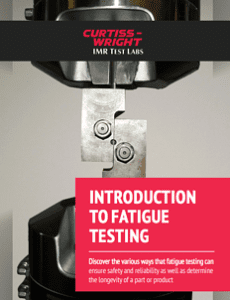
DOWNLOAD THE FATIGUE TESTING EBOOK
Fatigue Testing Overview
Fatigue Testing Capabilities
IMR Test Labs Expertise
Mechanical Fatigue Testing FAQ's
Q) How long does Mechanical Fatigue Testing take?
A) The time it takes to perform a Mechanical Fatigue test can vary however in most instances the test can be completed in 3 days to a week (longer times required for more complex, multi-departmental testing requests).
Q) What kind of fatigue testing is performed on my materials?
A) The type Mechanical Fatigue Test that is performed on your materials is determined by the assessment of several factors, including the application of use, the environmental exposures and estimated life expectancy of the material.
Q) Can fatigue testing be done at all of your facility locations?
A) Mechanical Fatigue Testing can be performed at our Ithaca, NY and Suzhou, China locations. See a complete list of IMR Test Labs Locations and their service offerings.
Q) Can IMR test to ASTM Mechanical Fatigue Testing standards?
A) There are a myriad of ASTM testing methods that IMR performs. Contact us with your testing needs at 888-464-8422 to talk with our experts or contact us by email.
Q) How much does Mechanical Fatigue Testing cost?
A) The price of Mechanical Fatigue Testing can vary depending on several factors. There are discounts available for long-term testing arrangements, and premiums charged for expedited testing. For more information, you can reach a testing expert at 888-464-8422 or request a quote.
Q) What type of analysis report is provided after a Fatigue Test?
A) A thorough detail of the data generated by testing, graphs and pictures where required, and analysis of the failure mechanism. Click here for a sample Mechanical Failure Analysis Report PDF
Q) How accurate are Mechanical Fatigue Testing results?
A) IMR Test Labs provides highly accurate results that are cross-checked and approved prior to submission to the customer.
